
Natural red frosting color stability: Why fading happens
Natural red food colors made from fruits and vegetables are widely used to create pink to red hues in frostings, buttercreams, and creme fillings. The anthocyanin pigments in concentrates made from raw materials such as purple sweet potato, radish, and red potato can deliver bright, appealing shades. Yet developers often encounter fading, dulling, or unexpected shifts during storage.
Even when using the same natural red color, stability can vary significantly between frosting formulations. To understand why this happens, it’s essential to look at how ingredients interact within the frosting system—not just at the color itself.
What we mean by frosting
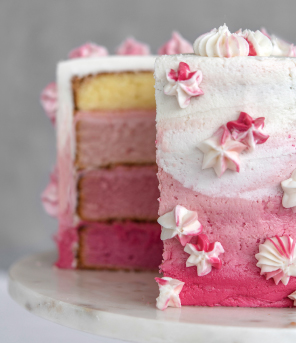
In this article, “frosting” refers to moderate‑ to high‑fat bakery systems, including:
- Buttercream‑style frostings
- Ready‑to‑use frostings
- Sandwich creme fillings
These systems typically rely on fat, emulsifiers, and stabilizing ingredients to create body, texture, and aeration.
High‑moisture icing types—such as glazes, fondants, and pourable icings—behave differently and are not the focus here.
Why natural red food colors can be challenging in frosting systems
Shelf-stable frosting systems create a formulation environment unlike many other bakery applications. They often include:
- High levels of fat
- Emulsifiers that structure the fat matrix
- Stabilizing ingredients
- Aeration, which increases exposure to oxygen
- Packaging or display conditions that allow light exposure
Importantly, fat itself is not the issue. Anthocyanin‑containing colors can perform well in high-fat applications when overall conditions support stability.
In many cases, fading is driven by oxidative balance and ingredient interactions rather than fat content alone.
How formulation ingredients influence natural red color stability
Anthocyanins are naturally occurring red color compounds that are sensitive to multiple degradation pathways, which can be triggered by oxidative conditions, heat, light, and pH. Several formulation variables influence this stress level in frosting systems. These factors can interact differently from one formulation to another, helping explain why the same natural color may perform well in one frosting but fade more quickly in another.
- Fat system characteristics
Commercial fats such as palm oil undergo refining steps such as bleaching and deodorization. These steps help standardize flavor and appearance, yet they may also influence oxidative balance within the frosting system in several ways:
- Residual oxidative byproducts may remain following refining, creating background oxidative conditions that can accelerate degradation of anthocyanin‑containing colors during storage.
- Differences in fat sourcing or refining conditions can alter how consistently natural red colors perform across frosting formulations.
- Emulsifier type and function
Emulsifiers structure fat‑based systems and influence how natural colors disperse within the frosting matrix.
Depending on their structure, some emulsifier systems help create a more supportive environment for color stability—while others may increase sensitivity to color degradation.
- Ingredient interactions and additives
Beyond fats and emulsifiers, other ingredients used in frosting systems may influence how components interact within the matrix. Certain reactive compounds that may be present in flavors, processing aids, or carryover residues can also contribute to overall color degradation. These shifts shape the formulation environment the color experiences during storage — including factors such as overall system pH, ingredient compatibility, and color dosage.
- Storage and environmental conditions
External conditions also influence stability, including:
- Light exposure during display
- Oxygen exposure from aeration or packaging
- Temperature fluctuations and overall shelf life
Our research on natural red frosting stability
To better understand these formulation behaviors, our technical team conducted systematic screening across fat‑based frosting systems. The work examined how different fat types, emulsifier structures, ingredient combinations, and oxidative conditions influence long‑term appearance.
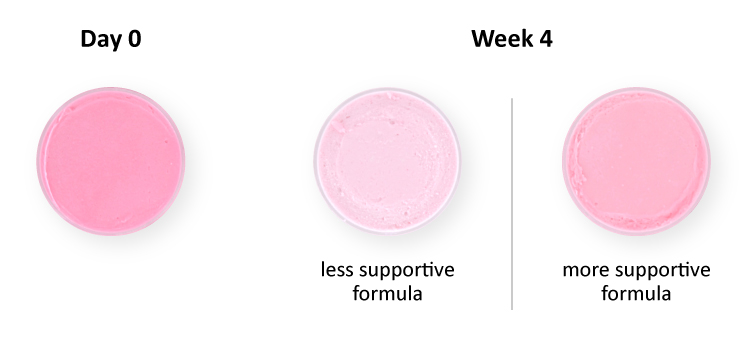
This screening helped clarify why some frosting systems maintain vibrant color throughout shelf life while others fade more quickly. Below is one example showing the appearance of the same color in a less supportive formulation versus a more supportive formulation after four weeks of ambient, dark, room‑temperature storage.
Key insights from this work include:
1. Formulation environment determines stability.
Even small ingredient differences—including overall system pH, ingredient compatibility, and color dosage—can have an important influence on degradation pathways and impact color retention.
2. Emulsifier systems are critical.
Some emulsifier structures create more supportive conditions for natural red colors, while others increase sensitivity to degradation.
3. Matrix conditions influence degradation.
The combination of fat characteristics, aeration, and supporting ingredients plays a major role in how long natural red colors maintain their appearance.
4. Performance differences can be significant.
Less supportive systems may show noticeable fading within days or weeks, whereas more optimized formulations can maintain stable color throughout shelf life.
Continue the conversation
If your team is experiencing fading or stability challenges with natural red frosting colors, our technical experts can help.
We can share insights from recent screening work and discuss how you can adjust recipes to optimize performance with EXBERRY® colors.
Fill out the form to discuss your frosting formulation needs with our technical team.